All About Nuts
From thegoldminer 17 years ago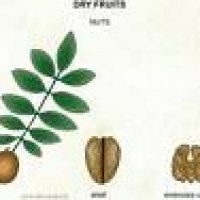

- - to make
- Serves 4
In the Oct-Nov issue of Cooks Country they listed the different nuts and interesting facts about each nut. Thought many would enjoy reading about the nuts, I did. JJ
Ingredients
- Cooks Country is a great magazine to subscribe as they go into great detail of how they arrive at a particular recipe. The magazine also has very interesting tips and articles. I consider it well worth the subscription price. There were pics of each type of nut but I could not figure out how to copy and paste a pic from a PDF file. If someone can tell how to do it I will add them in the Step by Step section shopping list
How to make it
- Peanut - SOUTHERN LEGUME
- Peanuts are not nuts but rather legumes that grow underground. Though typically sold roasted (either in the shell or shelled), fresh peanuts are a popular treat in the South, where they are boiled until tender, salted, and eaten out of hand. In the test kitchen, we sprinkle shelled, dry-roasted peanuts over stir-fries and salads or use a food processor to finely grind them for cookies.
- Brazil Nut - AMAZONIAN COCONUT
- Brazil nuts are neither nuts (botanically, they are seeds) nor from Brazil (most are cultivated in Bolivia). Their texture and flavor are “eerily similar to coconut” with a “musty,” “vanilla-y” finish. These high fat nuts become rancid very quickly and should be stored in the refrigerator or freezer. To make quick work of shelling Brazil nuts, boil them in their shell for 3 minutes, and then let them cool to room temperature before cracking. This was most interesting, I think when they are boiled the shell expands. I always had the seed stuck to shells when cracking. I will buy some and try this method.
- Almond - PEACHY KEEN
- Almonds are closely related to stone fruit, which is why the shells look so much like peach pits. We like shelled whole nuts for eating out of hand, but because the teardrop shape makes them difficult to prep, we prefer sliced and slivered almonds for cooking. Thin-sliced almonds are best in cookies or cakes, salads, and pilafs, while the substantial crunch of slivered almonds works well sprinkled over stir-fries and ice cream sundaes.
- Marcona Almond - SPANISH QUEEN
- Also called the “Queen of Almonds,” these flat, stubby (and expensive) almonds grow primarily on the Mediterranean coast of Spain. They are prized for their rich flavor and smooth texture. The “milky sweet” flavor and “complex floral aroma” of Marcona almonds are best enjoyed simply—they are traditionally fried in olive oil, salted, and eaten out of hand. Look for these almonds at gourmet markets and health food stores.
- Cashew - AVOID THE SHELL
- Cashew nuts grow at the base of the cashew apple; although the fruit is edible, the shell of the cashew nut is toxic (the reason they are almost always sold shelled). Whenever possible, purchase whole cashews rather than cashew “halves” or “halves and pieces,” which tend to be of lower quality. When cooking with cashews, toast the nuts to enhance their flavor and crunchy texture.
- Pistachio - STICK WITH GREEN
- Most pistachios sold in the U.S. are cultivated in California. These mottled purple and green nuts are concealed in very hard, hinged shells. Though most often eaten out of hand, their “crunchy” texture and “fruity, citrus-y” flavor also work well in both savory and sweet dishes. Look for pistachios that are partially open—a sign that the nut is fully mature (they’re also easier to shell). Avoid red pistachios, which are dyed.
- Hazelnut - LOSE THE SKIN
- Also called filberts or cobnuts, these sweet, heart-shaped nuts have a “soft crunch” and a “sweet-smoky” flavor. The easiest way to remove the bitter skins is to toast the nuts in a 350-degree oven for 10 to 15 minutes until fragrant. When the nuts are cool enough to handle, place them in a clean kitchen towel and rub the nuts back and forth to loosen and remove the skins.
- Macadamia Nut - TOUGH TO CRACK
- The macadamia tree is native to Australia. Because their shells are so strong, harvesting the nuts is an arduous—and expensive—process. Macadamia nuts have a “crunchy-chalky” texture and a “meaty,” “slightly bitter” flavor. Once opened, the nuts should be refrigerated or frozen to prevent rancidity.
- Pecan - SOUTHERN NUT
- A member of the hickory family, pecans are native to the south-central U.S. Pecans have relatively thin shells, making them easy to crack and eat out of hand. Their nut meat is “soft, slightly oily,” and “maple-y sweet” with a “pleasantly bitter” balance. With a fat content of roughly 70 percent, shelled pecans spoil easily; they should be frozen until ready to use. To check whole nuts for freshness, give them a shake. If the nut rattles in the shell, they are not fresh and should be discarded.
- Pine Nut - WHEATY AND WAXY
- Also called piñons (Spanish) or pignoli (Italian), these diminutive nuts are harvested from pine cones. There are two main types of pine nuts: the delicately flavored, torpedo-shaped Mediterranean pine nuts and the more assertive corn kernel–shaped Chinese pine nuts (pictured). The less-expensive Chinese variety is more widely available, but both can be used interchangeably. Pine nuts have a “mild, wheaty” taste and a “slightly waxy” texture.
- Chestnut - TREE POTATO
- Fresh chestnuts are available in the fall and winter, but vacuum-sealed jars of shelled chestnuts can be purchased throughout the year (though they pale in comparison to the fresh nuts). When roasted, chestnuts become “fluffy and starchy” and take on a “sweet, potato-y” flavor. To prepare fresh chestnuts, slice across the equator of the shell (without cutting into the nutmeat), roast at 425 degrees for 30 minutes, let cool, and then peel away the shell and papery skin.
- Walnut - BIG AND BITTER
- Although the wrinkled shells of these nuts are so hard that they are used as an industrial abrasive, a distinct seam that runs the perimeter of the shell makes them fairly easy to crack. There are two main varieties of walnuts: English (or Persian) and black. The English (pictured) is more common in the U.S. Walnuts have a “crunchy, slightly oily” texture and an “earthy bitterness” with a strong “tannic” aftertaste.

The Rating
Reviewed by 9 people-
~Hello~
I Really Appreciate Your research
into the origins and uses of these nuts~
I have eaten them all, at one time or another,
and enjoy them all for their distinctive flavors
and texture~ "5"FORK!!!!! ~
~*~mj~*~
more mjcmcook
in Beach City loved it
mjcmcook
in Beach City loved it
-
Really interesting. Thanks for the post.
 dragonwings647
in Duchesne loved it
dragonwings647
in Duchesne loved it
-
Five forks, jj. You have become the groups educator! I'm lovin that and agree that Cooks Country is a great publication.
Lorraine lacrenshaw
in Horsham loved it
lacrenshaw
in Horsham loved it
The Groups
- Not added to any groups yet!
Reviews & Comments 9
-
All Comments
-
Your Comments
" It was excellent "
" It was excellent "
" It was excellent "
" It was excellent "
" It was excellent "
" It was excellent "
" It was excellent "