International Conversion Charts
From midgelet 16 years ago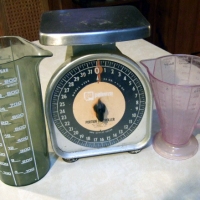
- - to make
- Serves 1
Group recipes spans the world and so with baking recipes which are more exacting than cooking, almost precise measurements are needed to assure success. I am so used to baking anything and have always relied not only on conversion charts but also scales to weigh ingredients plus also use those wonderful European measurement cups which can be found in most specialty kitchen stores I hope this partial chart does help everyone world wide I tried to be "very specific" for everyone! Read more !! See less
Ingredients
- OUNCES TO GRAMS APPROXIMATES shopping list
- 1oz.= 28 gm shopping list
- 1 1/2 oz.=43 gm shopping list
- 1.75 0z = 50 gm shopping list
- 2 oz.= 57 gm shopping list
- 3 oz.= 85 gm shopping list
- 3 1/2 oz.=100 gm shopping list
- 4 oz.= 114 gm shopping list
- 5 oz.= 142 gm shopping list
- 6 oz.= 170 gm shopping list
- 7 oz.= 198 gm shopping list
- 8 oz.= 227 gm shopping list
- 9 oz.= 255 gm shopping list
- 10 oz.= 284 gm shopping list
- 11 oz.= 312 gm shopping list
- 12 oz.= 340 gm shopping list
- 13 oz.=369 gm shopping list
- 14 oz.=397 gm shopping list
- 15 oz.= 425 gm shopping list
- 1 lb ( 16 oz.) = 454 gm shopping list
- 2 lbs.= 908 gm shopping list
- 2 1/4 lb= 1 kg. shopping list
- 3 lb.= 1.36 kg shopping list
- 4 lb= 1.81 kg shopping list
- 5 lb.=2.27 kg shopping list
- 6 lb.= 2.72kg shopping list
- 7 lb.= 3.18 kg shopping list
- 8 lb.= 3.63 kg shopping list
- 9 lb.= 4.08 kg shopping list
- 10 lb. = 4.54 kg shopping list
- MISC. MEASURES AND INGREDIENTS shopping list
- Liquids: shopping list
- 1 dl = 6 Tablespoons plus 2 teaspoons , or approx 60 gm or 2 oz. shopping list
- 2 cups milk, water or wine = 1 pound / 500ml/ 1/2 L shopping list
- 1 cup milk, water or wine = 16 Tbs/8 ounces or 1/2 pound / or shopping list
- 250ml/225gm/1/4 L ,2.4 dl shopping list
- 2 cups = 16/oz/1 pint/ 500 ml/1/2 liter/4.75 dl shopping list
- 2 pints = 1quart/ 1 liter/32 oz/4cups/10 dL shopping list
- 4 quarts = 1 gallon/16 cups shopping list
- 1 jigger = 1/4 cup or 4 Tbs. others sources list as approx 1 1/2 oz. shopping list
- Note: the British Pint is 20 fluid ounces opposed to the American shopping list
- Pint which is 16 fluid ounces shopping list
- 1 3/4 English pints = 35 fluid ounces or 1 litre shopping list
- 1/4 English Pint = 1 gill = 5 fluid oz. shopping list
- 5 ml = 1/6 fl oz = 1 teaspoon shopping list
- 20 ml = 2/3 fl oz = 1 tablespoon shopping list
- 30 ml = 1 fl oz = 1 tablespoon plus 2 teaspoons shopping list
- 60 ml = 2 fl oz = 1/4 cup shopping list
- 85 ml = 2 1/2 fl oz = 1/3 cup shopping list
- 100 ml = 3 fl oz = 3/8 cup shopping list
- 125 ml = 4 fl oz = 1/2 cup shopping list
- 150 ml = 5 fl oz = 1/4 pint shopping list
- 250 ml = 8f l oz = 1 cup shopping list
- 300 ml = 10 fl oz = 1/2 pint shopping list
- 360 ml = 12 fl oz = 1 1/2 cups shopping list
- 420 ml = 14 fl oz = 1 3/4 cups shopping list
- 500 ml = 16 fl oz = 2 cups shopping list
- 600 ml = 20 fl oz = 1 pint = 2 1/2 cups shopping list
- 1 litre = 35 fl oz = 4 cups shopping list
- MISC SPOONS shopping list
- 1 dl = 6 Tablespoons plus 2 teaspoons , 2 oz shopping list
- 1 Tbs= 3 tsp/15ml/1/2 fluid ounce shopping list
- 2 Tbs= 1 oz/30gm shopping list
- 4 Tablespoons. = 1/4 cup/ 60 ml shopping list
- FLOUR: shopping list
- 1 dl flour = approx 7 Tbs, or 60 gm shopping list
- 4 cups all purpose flour = 1 pound/450gm, ( approximate ) shopping list
- 1 cup flour = 4 ounces /140 grams ( approx ) shopping list
- 1/4 oz = 4 Tbs. shopping list
- 1 quart of flour = 1 pound shopping list
- 4 1/2 cups cake or pastry flour = 1 pound shopping list
- cake flour shopping list
- 1 cup = 130 grams ( approx ) shopping list
- bread flour shopping list
- 1 cup = 160 grams ( approx ) shopping list
- butter/margarine shopping list
- 2 cups butter or stick margarine = 1 pound or 4 sticks shopping list
- 1 stick ( cube ) butter = 4 ounces/ 115gm, 8 Tbs butter= 1/4 pound = shopping list
- 1/2 cup shopping list
- 1 Tbs. butter = 14 gm shopping list
- SUGAR: shopping list
- 2 1/4 cups granulated sugar = 1 pound/454 gm shopping list
- 1 cup granulated sugar = 200 gm shopping list
- 1 Tbs sugar = 12 gm shopping list
- 4 cups confectioners sugar = 1 pound shopping list
- 1 cup brown sugar packed = 6 ounces/181 gm shopping list
- OVEN TEMPERATURE CHART : "approximate" shopping list
- Some common baking temperatures (F/C/G) F is Farenheit, C is Celsius and G stands for Gas Mark shopping list
- 225F=110C/Gasmark 1/4 shopping list
- 250F=130C/Gas1/2 shopping list
- 275F=140C/Gas1 shopping list
- 300F= 150C/Gas 2 shopping list
- 325 F = 160C/Gas 3 shopping list
- 350F= 180C/Gas4 shopping list
- 375F=190C/Gas5 shopping list
- 400F= 200C/Gas6 shopping list
- 425F= 220C/Gas7 shopping list
- 450F = 230C/Gas8 shopping list
- Fahrenheit Temperature Ranges: shopping list
- Cool: 225 to 250 F Warm 300 to 325 F shopping list
- Moderate:350F / 180C/ Gas 4 shopping list
- Mod hot: 375F shopping list
- Hot: 400: 425 F shopping list
- Very hot: 450F and above shopping list
- Celsius/Gas Mark Temperature Ranges shopping list
- Cool: 130 to 150C / 1/2 -2 shopping list
- Warm: 170C / 3 shopping list
- Moderate: 180C / Gas 4 or 350 F shopping list
- Mod. hot: 190C /5 shopping list
- Hot: 200 to 220C / 6 -7 shopping list
- Very Hot: 230C / 8 shopping list
How to make it
- Please use the handy chart above to help you with your recipes
- Remember to use the closest approximates and measure cups and scales if needed to weigh ingredients.
- WHY IS CORNSTARCH USED IN MANY EUROPEAN BAKED GOODS RECIPES???
- Cornstarch is used in combination with flour in many European cake and cookie recipes because it produces a finer-textured, more compact cake or a more tender cookie than flour alone.
- Please feel free to post more conversion charts and info if you have them

The Rating
Reviewed by 6 people-
Midge,
You are so thoughtful. Thank you for taking the time to do this. Bookmarked & Forked for your consideration.
Jo & Lee jolielives
in The Catskill Plateau loved it
jolielives
in The Catskill Plateau loved it
-
Going to print this and keep in my recipe note book. Thanks sooo much for sharing this!
Great idea to post! =)
5 Forks! pinkpasta
in Upstate loved it
pinkpasta
in Upstate loved it
-
This will really come in handy! Thanks for sharing, Midgelet.
 mrsc543
in North Reading loved it
mrsc543
in North Reading loved it


Reviews & Comments 4
-
All Comments
-
Your Comments
" It was excellent "
" It was excellent "
" It was excellent "
" It was excellent "